Schreibtisch des Ruhrgebiets: 10 Meaning, History, and the Region’s Remarkable Industrial Heritage
The phrase “Schreibtisch des Ruhrgebiets” is a German expression that can be translated into English as “the desk of the Ruhr region.” Depending on the context, it may refer to an office, a workplace, an administrative center, or a symbolic connection to the economic and industrial activities of the Ruhr area. The Ruhrgebiet, located in the western part of Germany, is one of the country’s most historically important industrial regions.
The Ruhr region is widely known for its coal mines, steel production, manufacturing industries, and transformation into a modern center for education, culture, business, and technology. Understanding the phrase “Schreibtisch des Ruhrgebiets” therefore requires looking beyond its literal meaning and exploring the broader history, working culture, and economic development of this fascinating German region.
What Does Schreibtisch des Ruhrgebiets Mean?
The German word “Schreibtisch des Ruhrgebiets” means “desk” in English, while “des Ruhrgebiets” means “of the Ruhr region.” Together, the expression literally translates to “desk of the Ruhr region.”
However, its exact meaning depends on where the phrase appears. It could be used in an article, a local publication, a business context, or a discussion about administrative work in the Ruhr area. Without additional context, it should not automatically be interpreted as the official name of a particular building, organization, or historical institution.
In a broader sense, a desk represents planning, communication, organization, and decision-making. These activities are essential to the Ruhr region because its industrial development depended not only on workers and factories but also on engineers, accountants, administrators, managers, and business owners.
Behind every successful industrial operation, there are offices where schedules are prepared, contracts are negotiated, finances are managed, and production activities are coordinated. This relationship between industrial labor and office work provides an interesting way to understand the expression.
The Ruhrgebiet: A Region with a Powerful History
The Ruhrgebiet is situated in North Rhine-Westphalia, Germany. It includes major cities such as Essen, Dortmund, Duisburg, Bochum, Gelsenkirchen, and Oberhausen. Although these cities have their own identities, they are closely connected through shared industrial history, transportation networks, and economic development.
During the nineteenth century, the Ruhr region experienced rapid industrial growth. Coal deposits supported the expansion of mining, while coal and coke helped fuel iron and steel production. Railways, canals, and factories developed alongside growing towns and cities.
As industrial production increased, businesses needed more organized administrative systems. Office workers managed orders, correspondence, payrolls, inventories, and relationships with suppliers. This created a growing demand for desks, offices, and professional workplaces.
The industrial history of the Ruhrgebiet therefore includes both physical labor and administrative organization. While miners and steelworkers became symbols of the region, the offices supporting their work were equally important to the functioning of its economy.
Why Offices Became Important in the Ruhr Region
Industrial companies cannot operate successfully through manufacturing alone. They also require planning, recordkeeping, financial management, and communication. As businesses in the Ruhrgebiet expanded, their administrative departments became increasingly important.
Large companies often needed offices for directors, engineers, purchasing departments, sales representatives, and human resources teams. These workplaces coordinated activities across mines, factories, warehouses, and transportation facilities.
A desk could be the place where production figures were reviewed, delivery schedules were prepared, and business decisions were documented. Before computers became widespread, paper files, typewriters, telephone systems, and handwritten records were essential tools for office employees.
The growth of administrative work also contributed to changes in employment. Not every job in the industrial economy required physical work in a mine or factory. Many people found employment in accounting, technical drawing, office management, logistics, and commercial services.
This development helped create a more diverse professional environment across the Ruhr region.
The Connection Between Industrial Work and Office Culture
One of the most interesting features of the Ruhrgebiet is the close relationship between industrial production and office culture. Factories and mines depended on reliable communication between managers, technical specialists, and workers.
For example, a steel production facility needed accurate records of raw materials, equipment maintenance, working hours, and customer orders. Office employees helped organize these details so that production could continue efficiently.
Similarly, coal mining companies needed administrative systems for employee records, safety documentation, transportation arrangements, and financial planning.
The desk represented a central point where information from different parts of an organization came together. Although office work was less physically demanding than mining or steel production, it required accuracy, responsibility, and strong organizational skills.
This combination of practical industry and professional administration became an important feature of the region’s economic life.
The Transformation of the Ruhrgebiet
The Ruhr region underwent significant economic changes during the second half of the twentieth century. Coal mining declined as energy markets changed, production costs increased, and industries faced international competition. Steel production also experienced major structural changes.
These developments affected employment, local communities, and the identity of many industrial cities. Former mining and manufacturing centers had to find new ways to support their economies.
The transformation encouraged investment in education, research, healthcare, logistics, information technology, and cultural activities. Universities, technology parks, research institutions, and service businesses became increasingly important.
As a result, the meaning of work in the Ruhrgebiet changed. Traditional industrial workplaces continued to exist, but modern offices became central to many new industries.
Today, office workers in the region may be involved in software development, engineering, digital marketing, public administration, education, healthcare management, and international business.
This evolution demonstrates how the Ruhrgebiet moved from an economy dominated by heavy industry toward a more diversified economic structure.
Modern Offices in the Ruhrgebiet
Modern office environments in the Ruhr region reflect broader changes in German working culture. Many organizations now use digital communication tools, cloud-based systems, electronic records, and collaborative software to manage daily operations.
Employees may work in traditional offices, shared workspaces, research facilities, or hybrid environments that combine home and office work. Flexible working arrangements have become increasingly relevant for many professional occupations.
Cities such as Essen and Dortmund offer a variety of business environments, from established corporate offices to smaller companies and emerging technology businesses. Duisburg also benefits from its major logistics and transportation connections, while Bochum has developed important education and research activities.
These cities demonstrate that the Ruhrgebiet is no longer defined exclusively by coal and steel. Its modern economy includes many different types of office-based work.
A desk in today’s Ruhr region may support international communication, data analysis, project management, or the development of new technologies. Although the tools have changed, the basic purpose of office work remains similar: organizing information and helping people work together effectively.
The Importance of Ergonomic Office Furniture
The desk itself remains an important part of a productive working environment. Whether someone works in a company office or from home, suitable furniture can improve comfort and support healthier working habits.
An ergonomic desk should provide sufficient space for a computer, keyboard, documents, and other essential equipment. The desk height should allow the user to maintain a comfortable posture while working.
An adjustable desk can be particularly useful because it allows users to alternate between sitting and standing. This may help reduce the amount of time spent sitting continuously, although regular movement and appropriate workstation setup remain important.
A suitable office chair, correct monitor positioning, and adequate lighting also contribute to a comfortable workspace.
For businesses in the Ruhrgebiet, investing in practical office furniture can help create an environment where employees can concentrate on their tasks. Small improvements in workstation design may make daily work more comfortable and organized.
The Ruhrgebiet as a Center for Business and Innovation
The Ruhr region continues to play an important role in Germany’s economy. Its population centers, universities, transportation infrastructure, and established industrial knowledge provide a foundation for new business activities.
Companies working in engineering, environmental technology, logistics, healthcare, energy, and digital services benefit from the region’s extensive networks. Many modern businesses also cooperate with universities and research organizations to develop new products and services.
Office-based professionals support these activities through planning, research, administration, marketing, finance, and customer communication.
The historical relationship between industry and administration remains relevant even as the economy changes. Modern businesses still need organized systems, accurate information, and effective decision-making.
In this sense, the desk continues to represent an important part of the Ruhrgebiet’s working identity. It connects the region’s industrial past with its increasingly knowledge-based future.
Cultural Heritage and the Industrial Workplace
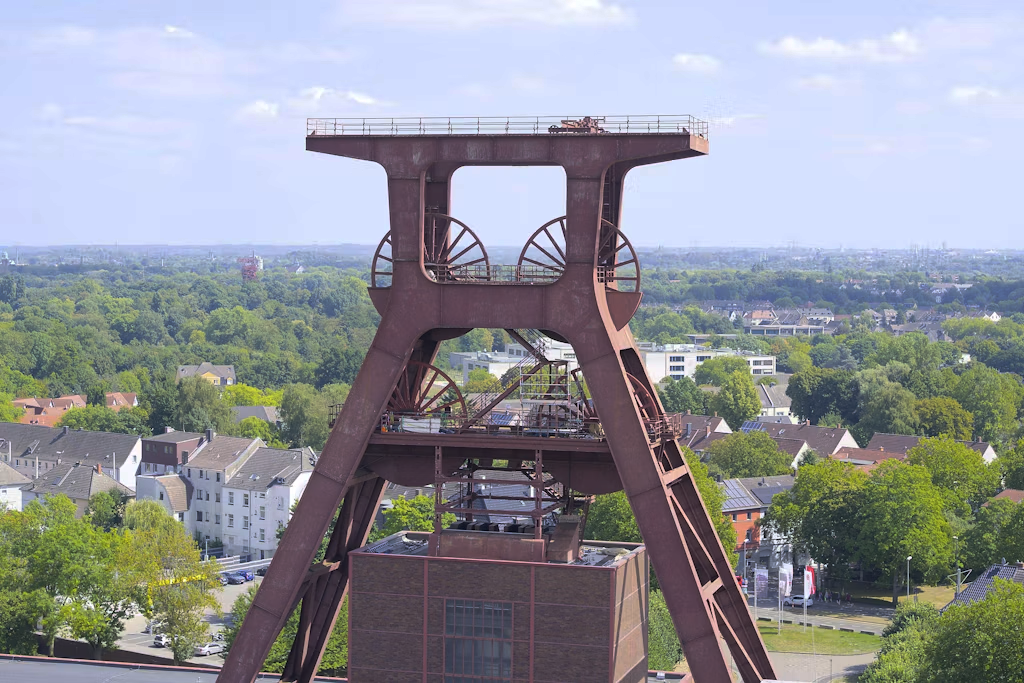
The industrial heritage of the Ruhrgebiet is visible in former mines, steelworks, museums, and preserved industrial buildings. These sites help visitors understand how work shaped the region’s cities and communities.
One famous example is the Zollverein Coal Mine Industrial Complex in Essen, which is recognized as a UNESCO World Heritage Site. It represents an important part of the region’s coal-mining history and industrial architecture.
Other former industrial locations have been converted into cultural venues, exhibition spaces, parks, and places for public events. These transformations show how buildings once associated with production can acquire new purposes.
Office work is also part of this heritage. Business records, technical plans, correspondence, and administrative documents can provide valuable information about how industrial companies operated and how local communities developed.
Together, these historical materials and preserved buildings offer a broader picture of the Ruhrgebiet, including the people who organized, managed, and supported industrial activity.
Why the Phrase Attracts Interest
The phrase “Schreibtisch des Ruhrgebiets” may attract interest because it combines a familiar everyday object with the identity of a well-known German region. It raises questions about the meaning of work, the role of administration, and the relationship between offices and industry.
Someone searching for this expression may be looking for its translation, a local reference, an article, or information about a particular organization. The context is therefore essential for understanding its intended meaning.
If the phrase appears in a newspaper, company website, historical document, or local business directory, examining the surrounding text can help establish whether it is a descriptive expression or the name of a specific subject.
Without that additional information, the safest interpretation is its literal translation and its possible connection to office work and the economic history of the Ruhrgebiet.
Conclusion
“Schreibtisch des Ruhrgebiets” literally means “the desk of the Ruhr region.” Although the expression does not identify a specific institution without further context, it offers an interesting starting point for exploring the relationship between administration, industry, and modern working life in western Germany.
The Ruhrgebiet developed through coal mining, steel production, manufacturing, and extensive business networks. Behind these industries were offices where people coordinated production, managed finances, organized transportation, and supported commercial activities.
Today, the region continues to evolve through education, research, technology, logistics, and service industries. Modern offices remain essential to this transformation, connecting traditional industrial knowledge with new professional opportunities.
Understanding the expression therefore provides a broader perspective on the Ruhrgebiet: a region where industrial heritage and modern business culture continue to shape everyday life.
Frequently Asked Questions
1. What does Schreibtisch des Ruhrgebiets mean in English?
It literally means “the desk of the Ruhr region.” Depending on the context, it may refer to office work, administration, or a specific local subject.
2. Where is the Ruhrgebiet located?
The Ruhrgebiet is in North Rhine-Westphalia in western Germany. Its major cities include Essen, Dortmund, Duisburg, Bochum, and Oberhausen.
3. Why is the Ruhrgebiet famous?
The region is known for its history of coal mining, steel production, and heavy industry. Today, it also has important education, research, logistics, technology, and service sectors.
Frequently Asked Questions About Schreibtisch des Ruhrgebiets
4. What is the literal translation of Schreibtisch des Ruhrgebiets?
The German expression translates literally into English as “the desk of the Ruhr region.” The exact meaning depends on the context in which the phrase is used.
5. Is Schreibtisch des Ruhrgebiets the name of a company?
The phrase alone does not establish the name of a specific company. Additional information, such as a website, article, or business address, would be needed to identify a particular organization.
6. Which cities belong to the Ruhrgebiet?
Important cities in the Ruhrgebiet include Essen, Dortmund, Duisburg, Bochum, Gelsenkirchen, Oberhausen, and Herne. Together, these cities form part of one of Germany’s best-known metropolitan regions.
7. How did office work develop in the Ruhr region?
Office work expanded as coal mining, steel production, and manufacturing companies grew. Businesses needed employees to manage accounting, correspondence, employee records, purchasing, and production schedules.
8. What industries are important in the Ruhrgebiet today?
The modern Ruhrgebiet has activities in logistics, education, healthcare, technology, engineering, research, environmental services, and manufacturing. These sectors contribute to the region’s economic diversification.
9. Why is the Ruhrgebiet important to German industrial history?
The Ruhrgebiet became a major industrial center because of its coal resources, steelworks, transportation networks, and manufacturing companies. Its industrial development played a significant role in Germany’s economic growth.
10. What is the connection between desks and industrial development?
Desks represent the administrative work needed to organize industrial operations. Managers, accountants, engineers, and office employees used workplaces to coordinate production, manage finances, and communicate with business partners.
11. Can Schreibtisch des Ruhrgebiets refer to a modern workplace?
Depending on the context, the expression could be used descriptively for an office or administrative workplace associated with the Ruhr region. However, it should not be assumed to be an official name without supporting information.
12. What is the role of technology in modern Ruhrgebiet offices?
Modern offices use computers, digital communication platforms, cloud services, and electronic records to manage information. These technologies help businesses coordinate projects, communicate with customers, and organize daily operations.
13. Is the Ruhrgebiet still an industrial region?
Yes. Although traditional coal mining has declined substantially, the Ruhrgebiet retains manufacturing and industrial activities while also supporting research, logistics, technology, and service-based businesses.
14. What is a famous industrial landmark in the Ruhrgebiet?
The Zollverein Coal Mine Industrial Complex in Essen is a well-known landmark and UNESCO World Heritage Site. It preserves important elements of the region’s industrial history and architecture.
15. Why should people learn about the Ruhrgebiet?
Learning about the Ruhrgebiet helps people understand Germany’s industrial development, economic transformation, cultural heritage, and modern working environment. The region provides an important example of how former industrial centers can adapt to changing economic conditions.