
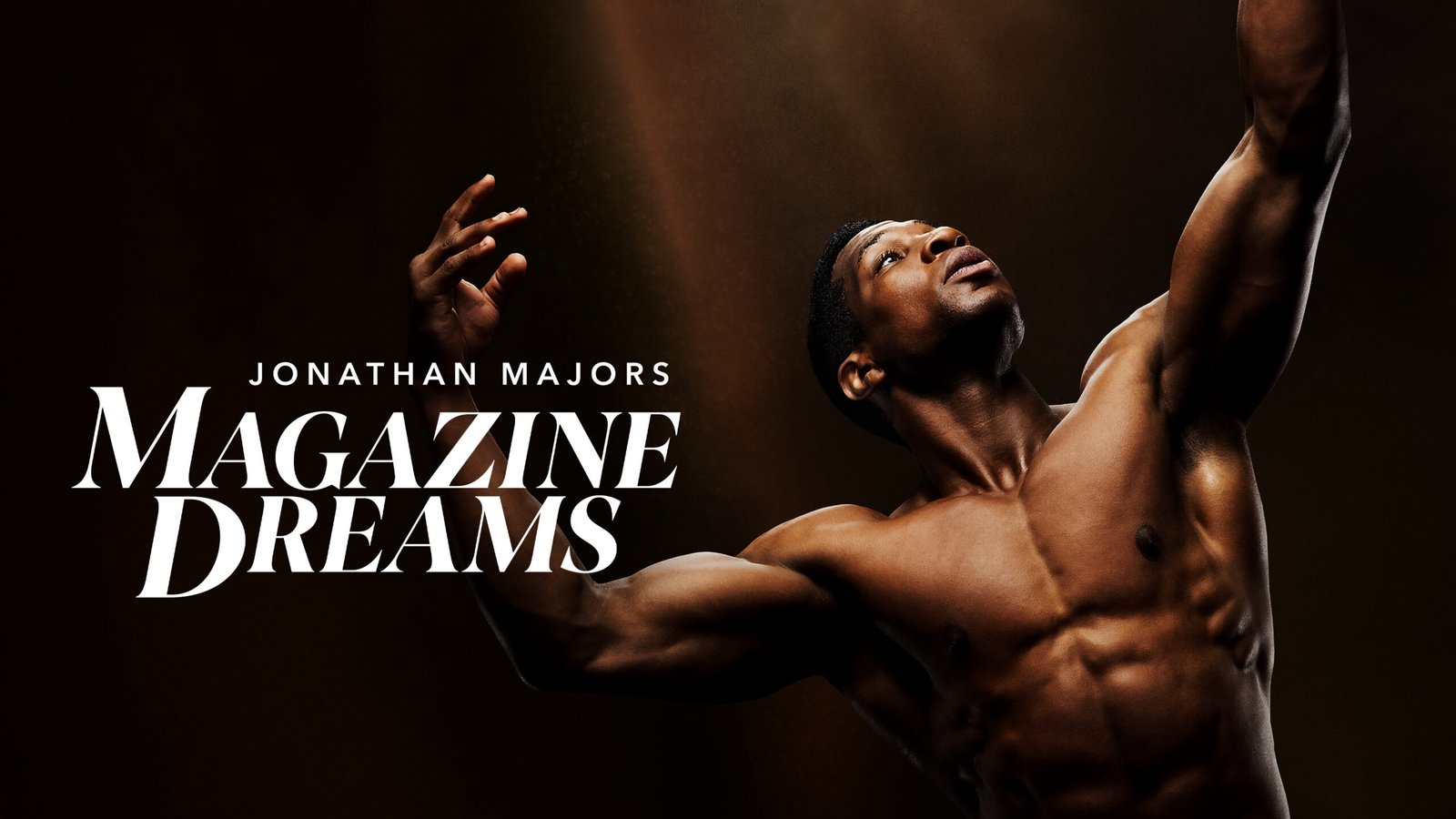
Magazine Dreams is a psychological drama that attracted considerable attention for its intense story, ambitious performance, and exploration of obsession, identity, and the desire for recognition. Written and directed by Elijah Bynum, the film focuses on an aspiring bodybuilder whose determination to become famous gradually turns into something much darker.
Rather than presenting bodybuilding simply as a story about physical strength, magazine dreams examines the emotional and psychological pressure behind the pursuit of an ideal image. The film asks difficult questions about masculinity, loneliness, self-worth, and the need to be admired.
The project also gained attention because of Jonathan Majors, who takes on the central role of Killian Maddox. His transformation for the character and the demanding nature of the performance became major talking points surrounding the movie.
What Is Magazine Dreams About?
At its core, Magazine Dreams follows Killian Maddox, an isolated amateur bodybuilder who dreams of appearing in bodybuilding magazines and becoming a respected figure in the fitness world.
Killian spends much of his life training. His daily routine revolves around exercise, nutrition, and developing an impressive physique. However, his ambition goes beyond simply becoming stronger. He wants other people to notice him.
That desire for recognition becomes increasingly important as the story progresses. Although he works relentlessly on his body, Killian struggles to build meaningful relationships and communicate comfortably with the people around him.
A Dream That Becomes an Obsession
Killian’s ambition initially appears understandable. Many athletes dedicate years to improving themselves and competing at a higher level. His problem is that his entire identity becomes connected to the dream.
The more he wants recognition, the more frustrated and isolated he becomes. His physical strength grows, but his emotional stability begins to deteriorate.
This contrast is one of the most important elements of the movie. Killian looks powerful from the outside, yet internally he remains deeply vulnerable.
Jonathan Majors as Killian Maddox
Jonathan Majors plays the central character, Killian Maddox. The role requires a significant physical and emotional commitment because much of the story depends on the audience understanding what exists beneath Killian’s intimidating appearance.
Majors portrays a man who desperately wants connection but frequently struggles to obtain it. His performance emphasizes Killian’s awkwardness, insecurity, anger, and determination.
A Physically Demanding Performance
The character’s bodybuilding lifestyle required an impressive physical transformation. The film uses Killian’s muscular appearance as more than visual decoration. His physique represents the enormous amount of effort he has invested in creating a new version of himself.
However, the movie repeatedly reminds viewers that physical development cannot automatically solve emotional problems.
Killian can control his workouts and diet, but he cannot control how other people perceive him. That difference becomes increasingly important throughout the story.
The Meaning Behind the Title Magazine Dreams
The title Magazine Dreams refers directly to Killian’s desire to see himself represented in bodybuilding publications. For him, appearing in a magazine would symbolize success, recognition, and validation.
A magazine photograph may seem insignificant to someone outside the bodybuilding world. For Killian, however, it represents proof that his years of sacrifice have meant something.
Recognition and Self-Worth
The movie uses this ambition to explore a broader human desire: the need to feel seen.
Killian wants people to recognize his dedication and physical achievements. When that recognition does not arrive, his disappointment becomes increasingly painful.
This makes the title particularly meaningful because the magazine is not really the ultimate goal. What Killian truly wants is acceptance and respect.
Themes Explored in Magazine Dreams
One reason the film generated discussion is its willingness to explore uncomfortable subjects. The story moves beyond bodybuilding and examines several issues affecting modern society.
Masculinity and Identity
Masculinity is one of the strongest themes in Magazine Dreams. Killian believes that becoming physically powerful will help him become more respected.
His journey raises questions about how men are often encouraged to hide vulnerability and prove themselves through strength, success, or dominance.
The film does not offer an easy solution. Instead, it presents the consequences of allowing external expectations to define personal identity.
Loneliness and Isolation
Despite spending time around other people, Killian is profoundly lonely. His difficulty forming genuine relationships becomes increasingly important as the story develops.
His isolation also affects how he interprets everyday interactions. Small disappointments can feel much larger because he has so few healthy emotional connections.
The movie therefore presents loneliness not simply as being physically alone, but as feeling disconnected from the people around you.
The Pursuit of Perfection
Bodybuilding naturally involves discipline and the pursuit of physical perfection. The film takes this concept and pushes it into darker territory.
Killian continually searches for a better version of himself. Yet every improvement creates another standard to reach.
This creates an endless cycle: achieve something, feel unsatisfied, and then push even harder.
The Psychological Side of Bodybuilding
Bodybuilding is often associated with discipline, confidence, and physical health. Magazine Dreams explores another side of the culture by focusing on the psychological pressure that can accompany an extreme commitment to appearance.
Killian’s body becomes a form of communication. He cannot always express his feelings through words, but he can demonstrate his dedication through his physique.
When Physical Strength Is Not Enough
One of the film’s central ideas is that physical power cannot automatically create emotional security.
Killian becomes stronger, but his personal problems remain. His body may attract attention, yet attention does not necessarily produce friendship, love, or respect.
This distinction gives the story much of its emotional weight.

The Film’s Style and Atmosphere
Magazine Dreams has a dark and uncomfortable atmosphere. Instead of presenting an inspirational sports story, it takes viewers into the psychological world of a deeply troubled individual.
The pacing allows the character’s frustrations to develop gradually. This approach makes the story feel more personal and unsettling.
A Character-Driven Story
The movie places enormous emphasis on Killian rather than relying on traditional action or competition sequences.
His routines, conversations, frustrations, and interactions with other people provide the foundation of the narrative.
This makes the film particularly interesting for viewers who enjoy psychological dramas built around complex characters.
Why Magazine Dreams Attracted Attention
The movie generated significant interest after its festival presentation. Viewers and critics were drawn to its unusual subject matter and Jonathan Majors’ committed performance.
Rather than following the familiar structure of a conventional sports drama, the film focuses on the psychological consequences of obsession.
An Unconventional Sports Movie
There are no simple motivational lessons at the center of this story. The film does not suggest that working harder will automatically lead to success.
Instead, it examines what can happen when ambition becomes inseparable from personal identity.
That approach gives Magazine Dreams a very different tone from traditional bodybuilding or athletic movies.
Magazine Dreams and the Desire for Fame
Modern culture often encourages people to build a public image. Social media, magazines, fitness platforms, and celebrity culture can make recognition seem like the ultimate measure of achievement.
Killian’s obsession reflects this broader phenomenon.
Becoming Visible
For Killian, being photographed in a magazine would make him visible. He wants evidence that his work has been acknowledged by the outside world.
The story therefore connects bodybuilding with a much larger question: how much of our identity depends on other people’s approval?
This makes the movie relevant beyond the fitness community.
The Importance of Human Connection
Although bodybuilding is central to Killian’s life, relationships are equally important to understanding his character.
He wants companionship and recognition but frequently struggles with communication. His inability to develop healthy connections contributes to his emotional instability.
Success Without Connection
The story suggests that achievement alone cannot replace human relationships.
A person can become physically impressive, professionally successful, or publicly recognized while still experiencing profound loneliness.
That message gives the film a deeper meaning than its bodybuilding premise initially suggests.
Is Magazine Dreams an Inspirational Movie?
Magazine Dreams is not a conventional inspirational sports film. Although Killian demonstrates extraordinary dedication, the story focuses more heavily on the consequences of obsession than on achievement.
Viewers expecting a traditional underdog story may therefore find the movie considerably darker.
A More Complicated Message
The film does not completely reject ambition or discipline. Instead, it questions what happens when those qualities become extreme.
Hard work can be valuable, but it cannot guarantee happiness. Physical transformation can improve confidence, but it cannot solve every emotional problem.
This complexity is part of what makes the film memorable.
What Makes Magazine Dreams Different?
The strongest aspect of Magazine Dreams is its willingness to create an uncomfortable central character. Killian is neither a straightforward hero nor a simple villain.
He has dreams, insecurities, frustrations, and genuine desires for connection. At the same time, his choices can become increasingly disturbing.
A Complicated Main Character
This complexity forces viewers to think about the difference between understanding someone’s struggles and approving of their behavior.
The film asks audiences to look beneath appearances without presenting easy answers.
Magazine Dreams – Final Thoughts
Magazine Dreams is a psychological drama that uses bodybuilding as a gateway into deeper subjects such as masculinity, loneliness, obsession, recognition, and self-worth.
Jonathan Majors’ portrayal of Killian Maddox gives the story its central force. His character demonstrates how the pursuit of physical perfection can become dangerous when it is used to compensate for emotional insecurity.
The title itself captures the character’s deepest desire. Killian does not simply want to become stronger or win a competition. He wants to be noticed, respected, and remembered.
That makes Magazine Dreams more than a story about bodybuilding. It is an examination of what can happen when a person’s entire sense of identity becomes dependent on achieving an ideal version of themselves.
For viewers interested in character-driven psychological dramas, complex protagonists, and unconventional sports stories, Magazine Dreams offers a challenging and thought-provoking experience.
Frequently Asked Questions About Magazine Dreams
What is Magazine Dreams about?
Magazine Dreams follows Killian Maddox, an aspiring bodybuilder who becomes increasingly obsessed with achieving recognition and building a successful identity through his physique.
Who stars in Magazine Dreams?
Jonathan Majors plays the lead role of Killian Maddox. His performance is central to the film and required significant physical and emotional preparation.
Is Magazine Dreams a bodybuilding movie?
Bodybuilding is an important part of the story, but the film is primarily a psychological drama. It uses the sport to explore ambition, loneliness, masculinity, obsession, and self-worth.
What does the title Magazine Dreams mean?
The title refers to Killian’s dream of appearing in bodybuilding magazines. More broadly, it represents his desire for recognition, acceptance, and validation.
Is Magazine Dreams an inspirational sports film?
Not in the traditional sense. The movie takes a darker approach and focuses on the psychological consequences of extreme ambition and isolation.
What are the main themes in Magazine Dreams?
The major themes include masculinity, loneliness, physical perfection, fame, recognition, identity, obsession, and the importance of genuine human connection.